
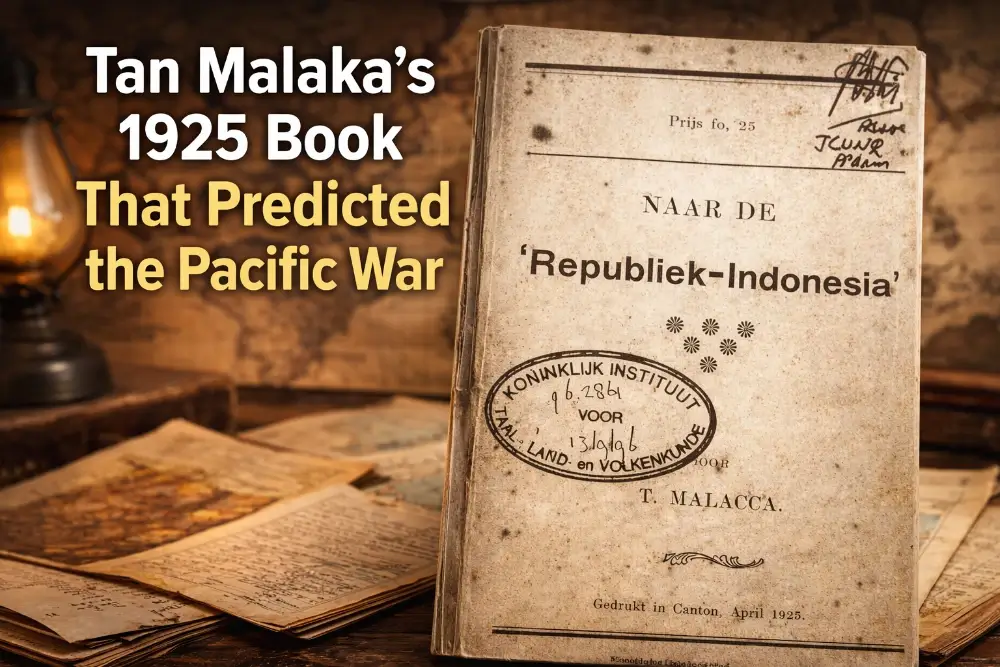

History is often written by the victors, but some of the most accurate warnings come from those watching events from the shadows. In 1925, long before the Pacific War erupted and reshaped global power, an exiled revolutionary predicted a coming conflict that many believed impossible.
That man was Tan Malaka, an Indonesian revolutionary whose sharp geopolitical thinking allowed him to foresee tensions between the United States and Japan years before World War II reached the Pacific. From exile in Canton, China, he wrote a book that would later stand as one of the most remarkable predictions in modern history.
Table of Contents
The Revolutionary in Exile: Who Was Tan Malaka?
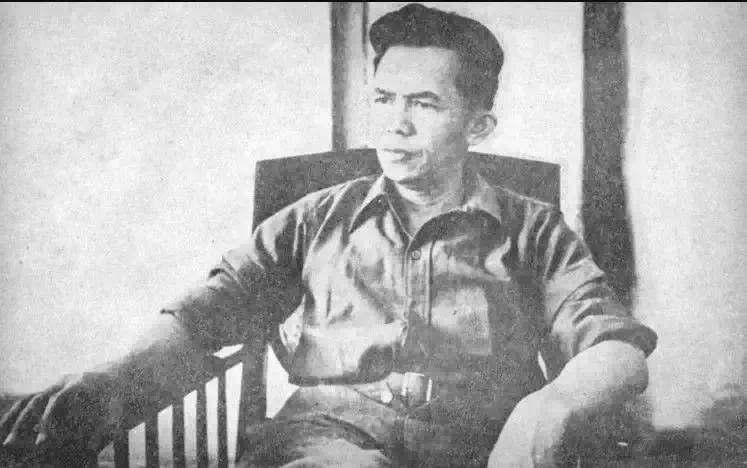
Tan Malaka was not a general, diplomat, or official policymaker. He was an Indonesian revolutionary who spent much of his life moving between countries to avoid arrest and political persecution. Living in exile forced him to observe the world differently from those working inside powerful governments.
From this distance, he studied global systems rather than isolated events. He focused on the expansion of empires, the movement of trade routes, and the strategic positioning of military forces. Instead of reacting to daily political news, he examined long-term patterns shaping the future of nations.
This perspective gave him a rare advantage. He was not limited by official narratives or diplomatic optimism. Instead, he analyzed the deeper forces that often lead to war, especially in regions where powerful nations compete for influence.
The Book That Predicted the Pacific War
In 1925, while living in exile, Tan Malaka wrote his influential book Naar de Republik Indonesia (Toward the Republic of Indonesia). While the title suggested a focus on Indonesian independence, the book contained much broader geopolitical insight.
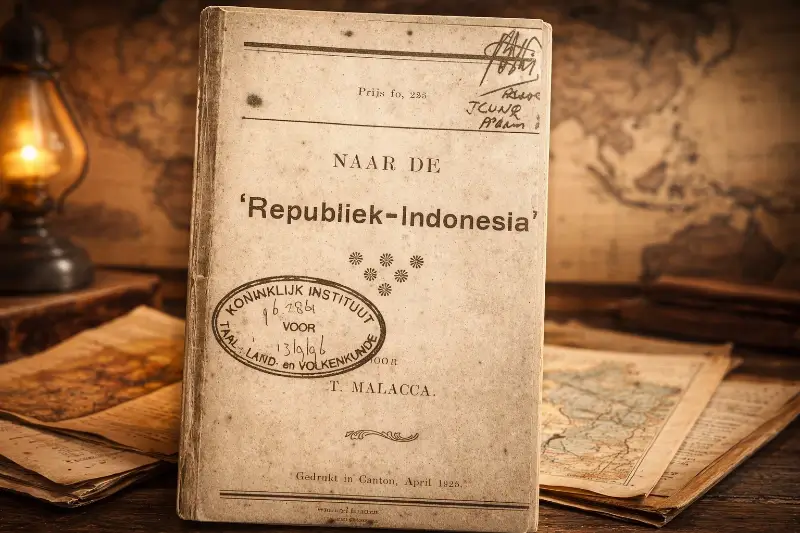
Inside its pages, Tan Malaka warned that the United States and Japan were heading toward a dangerous collision. He argued that their growing presence in the Pacific would eventually create unavoidable tension. At the time, this prediction sounded extreme, especially since the world was still recovering from World War I.
However, Tan Malaka believed that conflict was not random. He saw war as the natural outcome of expanding power, economic rivalry, and strategic competition. His warning suggested that the Pacific region would become the next major battlefield if rival empires continued to grow without limits.
The Geopolitical Logic Behind His Prediction
Tan Malaka based his prediction on structural forces rather than emotional reactions between leaders. He believed that war between the United States and Japan would happen because their long-term interests could not peacefully coexist forever.
- Trade Route Dominance: The Pacific Ocean was becoming the main artery of global trade. Nations that controlled shipping lanes controlled economic power.
- Territorial Expansion: Japan sought to extend its influence across Asia, while the United States strengthened its presence in the Pacific region.
- Resource Competition: Industrial nations required steady supplies of raw materials, many of which were located in territories both powers wanted to influence.
These overlapping ambitions created tension that diplomacy alone could not permanently resolve. Tan Malaka believed the system itself was pushing both nations toward confrontation.
Reading the Shape of Empire
One of the most striking aspects of Tan Malaka’s thinking was his ability to “read the shape of empire.” Instead of focusing only on political speeches or temporary alliances, he studied the physical and economic structure of global power.
He examined naval bases, colonial holdings, trade routes, and industrial expansion. These elements revealed how nations positioned themselves for influence long before conflict began. He understood that the Pacific was not just water separating nations; it was a limited space filled with competing ambitions.
While many leaders trusted treaties to preserve peace, Tan Malaka believed that treaties could delay war but rarely remove its causes. When two expanding powers share the same strategic region, pressure builds until resistance becomes unavoidable.
Sixteen Years Later: The Pacific War Begins
Sixteen years after Tan Malaka wrote his prediction, the Pacific War began in 1941. Rising tensions between Japan and the United States escalated into direct military conflict. The clash reshaped Asia and transformed the global balance of power.
Japan’s territorial expansion across Asia increased pressure on Western powers. The United States responded with economic measures and military preparation. Diplomatic negotiations failed to resolve differences, and eventually, war erupted across the Pacific region.
When the conflict began, it confirmed the structural forces Tan Malaka had identified years earlier. What he described as inevitable tension had turned into open warfare.
Why Tan Malaka’s Prediction Still Matters Today
The story of Tan Malaka is not just about the past. It offers insight into how large-scale conflicts develop over time. Major wars rarely begin suddenly. They grow slowly through economic competition, territorial expansion, and political rivalry.
His analysis also highlights the importance of long-term thinking. By studying trade patterns, industrial needs, and strategic geography, it is sometimes possible to recognize future risks before they become visible crises.
Another powerful lesson from Tan Malaka’s story is the value of outsider perspectives. Because he lived outside the centers of power, he observed global systems more objectively. This distance allowed him to recognize tensions others overlooked.
Conclusion: A Forgotten Warning That History Confirmed
Tan Malaka remains one of the most intriguing figures in modern history. As an Indonesian revolutionary living in exile, he lacked formal authority but possessed remarkable insight. His 1925 warning about conflict in the Pacific stands as one of the clearest early signals of the coming Pacific War.
His prediction reminds us that history often leaves clues long before events unfold. Trade, territory, and resources continue to shape global relationships today, just as they did in the early twentieth century. By studying these patterns carefully, future conflicts may become easier to understand—and perhaps easier to prevent.

Add your first comment to this post