
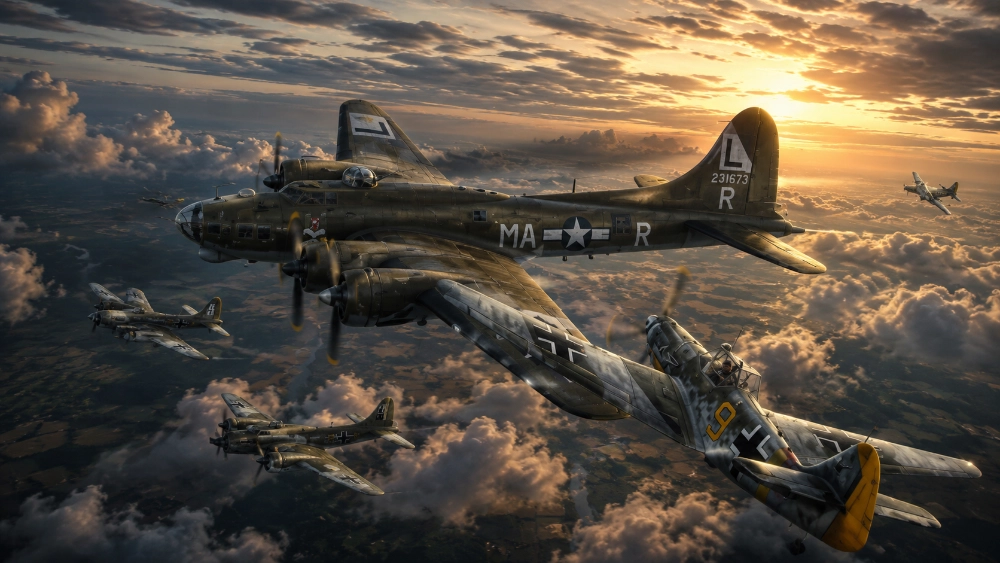

By April 1945, Nazi Germany was collapsing on every front. The Soviet Army was closing in from the east, the Western Allies were advancing from the west, and the Luftwaffe had been reduced to a force fighting under severe shortages of fuel, aircraft, and experienced pilots.
In that final phase of World War II, German planners turned to one of the most desperate ideas of the war: a volunteer ramming mission against Allied bombers. The story of this mission is closely tied to a single, controversial Luftwaffe unit.
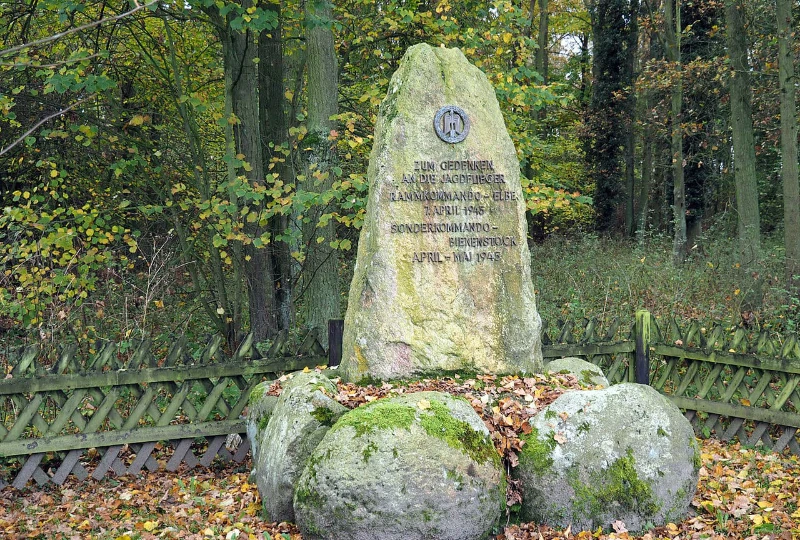
The unit is commonly known as Sonderkommando Elbe, although some historians prefer the term Rammkommando Elbe to avoid confusion with the Nazi camp term Sonderkommando. The operation remains one of the most debated episodes of the late-war Luftwaffe and is often cited as Germany’s final volunteer ramming mission.
Sorth Video Version
If you prefer to start with a fast, visual overview, you can watch the Shorts video below. It delivers the core story of Sonderkommando Elbe in under a minute before you dive into the full historical context.
Key Takeaways
This section gives you the main points about Sonderkommando Elbe at a glance before we break down the details and chronology.
- Sonderkommando Elbe was the Luftwaffe’s only operational ramming unit.
- Its sole mission took place on April 7, 1945, against a massive Allied bomber formation.
- Approximately 2,000 men reportedly volunteered, and around 300 were selected.
- The pilots flew modified Messerschmitt Bf 109 fighters stripped down for speed and climb performance.
- The mission was not officially intended as a conventional suicide attack, although survival odds were extremely low.
- The operation achieved only limited tactical results and failed to influence the outcome of the war.
- Germany surrendered just 31 days after the mission.
- Sonderkommando Elbe remains one of the most studied examples of late-war Luftwaffe desperation.
Table of Contents
What Was Sonderkommando Elbe?
Sonderkommando Elbe was a special Luftwaffe formation created for a single purpose: to attack Allied heavy bombers by ramming them in mid-air. In practice, it was conceived as a last-ditch way to sacrifice aircraft in order to bring down as many enemy bombers as possible in one dramatic blow.
How the Unit Was Equipped
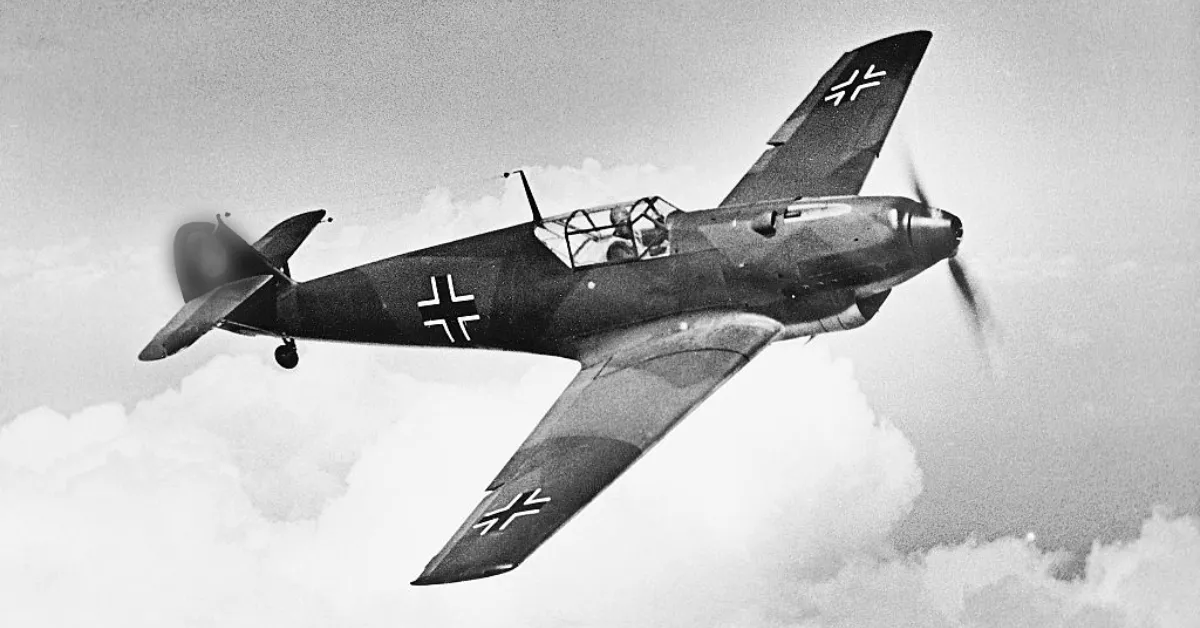
The aircraft assigned to the unit were Messerschmitt Bf 109 fighters modified specifically for the mission. Armor and most armament were removed to improve performance, leaving pilots with fast, lightweight aircraft intended to strike vulnerable parts of enemy bombers, particularly the tail assembly.
Configured this way, Sonderkommando Elbe’s Bf 109s were no longer optimized for conventional dogfights. Instead, they were effectively turned into disposable weapons designed to punch holes in tight bomber formations.
A Sign of Luftwaffe’s Decline
The concept reflected the deteriorating state of Germany’s air war in early 1945. The Luftwaffe still possessed aircraft, but it lacked sufficient fuel, trained pilots, and operational flexibility to challenge Allied air superiority through conventional means.
In that context, the creation of a ramming unit was not a sign of strength or innovation. It was clear evidence that conventional solutions had largely disappeared and that Nazi leaders were increasingly willing to gamble lives on extreme, low-probability tactics.
Why Germany Created Sonderkommando Elbe
By the spring of 1945, Germany’s strategic position was beyond repair. The front lines were collapsing, and in the air, Germany had almost no effective way left to stop the relentless Allied bombing campaign.
Allied Bombing Pressure
Allied bombers were striking industrial targets, transportation networks, oil facilities, and military infrastructure with overwhelming force. At the same time, Soviet and Western Allied armies were advancing steadily toward the heart of Germany.
Large German cities were repeatedly bombed, rail lines were cut, and fuel refineries were destroyed. Without fuel and logistics, the Luftwaffe could no longer defend German airspace the way it had earlier in the war.
Desperate Strategic Thinking
German commanders hoped that a special ramming force could disrupt Allied bomber formations, inflict noticeable losses, and buy precious time for the defense of the Reich. Some also believed that the psychological impact of such attacks might unsettle Allied crews and planners.
The reality was far less hopeful. By April 1945, Germany no longer possessed the industrial or operational capacity to reverse the course of the war. Sonderkommando Elbe was a desperate response to a strategic situation that was already irreversibly lost.
Why Thousands Volunteered for Sonderkommando Elbe
One of the most striking aspects of this story is that the Luftwaffe did not simply assign pilots at random. Instead, it called for volunteers to join a mission where the chances of survival were obviously very low.
The Volunteer Call
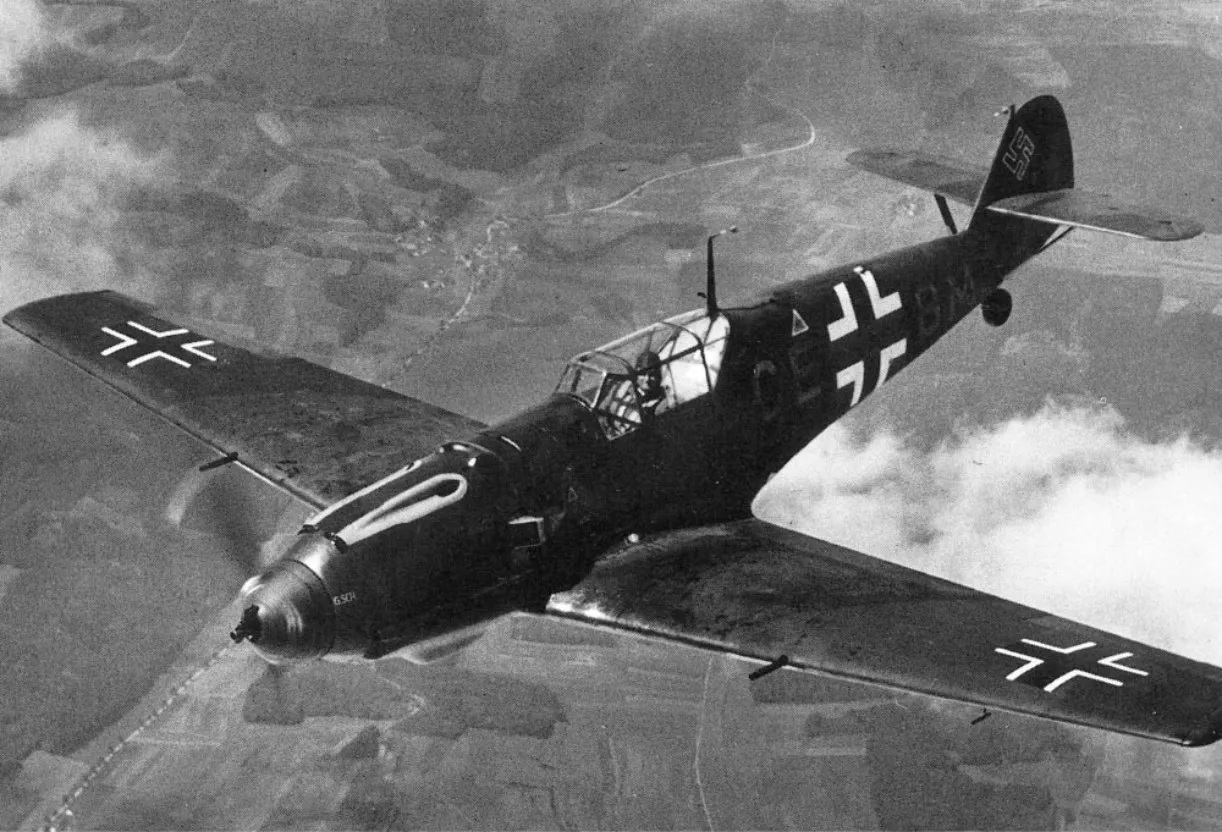
According to historical accounts, approximately 2,000 men volunteered, and around 300 were selected. Many of them were very young pilots with limited combat experience, shaped by years of Nazi propaganda and total war.
Volunteering for Sonderkommando Elbe meant accepting that the next mission might easily be the last. That alone tells us how intense the political, social, and emotional pressure had become in Germany’s final weeks.
Motivations and Mindset
This detail changes the nature of the story. These were not ordinary conscripts forced into a dangerous assignment. They volunteered during the closing phase of a war that Germany was visibly losing.
Their motivations likely varied. Some may have been driven by patriotism, loyalty, or a desire to defend their homeland. Others may have acted out of ideological commitment, a sense of honor, social pressure, fear of being seen as cowards, or a belief that they had little left to lose.
History cannot fully reconstruct what each pilot believed. What it can show is that Sonderkommando Elbe attracted volunteers at a time when defeat seemed inevitable, turning the unit into a window into the psychology of young Germans at the very end of the Third Reich.
April 7, 1945: The Only Mission
The unit’s only operational sortie took place on April 7, 1945. On that single day, the entire Sonderkommando Elbe concept was tested in the skies over Germany.
The Scale of the Battle
On that day, approximately 180 German fighters launched to intercept a formation of roughly 1,300 American bombers escorted by hundreds of fighter aircraft.
The scale of the challenge was immense. Allied bomber formations were protected by experienced crews, extensive defensive armament, and large, well-coordinated fighter escorts. Many German pilots faced heavy fire long before they could get close enough to attempt a ramming attack.
Into a Sky Dominated by Allies
Despite these realities, the volunteer pilots pressed forward into one of the largest air battles of the war’s final months. For many of them, it was their first and last direct encounter with the massive Allied bomber streams that had reshaped the European air war.
Was Sonderkommando Elbe a Suicide Mission?
Not exactly. From today’s perspective, it is easy to label the operation a suicide mission, but the official doctrine was not identical to that of Japanese kamikaze units.
Official Instructions vs Reality
Sonderkommando Elbe is frequently compared to Japanese kamikaze operations, but important differences existed between the two.
German planners did not officially expect pilots to die during the attack. Instead, pilots were instructed to strike vulnerable sections of enemy bombers and, if possible, escape by parachute after the collision.
In practice, however, survival was far from guaranteed. Penetrating a heavily defended bomber stream, ramming at high speed, and then escaping a damaged aircraft in time to open a parachute was an almost impossible sequence of tasks.
Historical Interpretation
Pilots had to reach the formation, survive defensive gunfire, make physical contact with a bomber, and then successfully abandon their own aircraft. The chances of surviving such circumstances were extremely low.
For that reason, many historians describe Sonderkommando Elbe as a high-risk volunteer ramming mission rather than a formal suicide operation. Morally and psychologically, however, the experience for pilots was close to a one-way mission, even if that was not the wording used in official orders.
The Meaning of the Name Sonderkommando
The name itself requires careful handling. Outside the Luftwaffe context, the same term carries a very different and much darker meaning in Holocaust history.
Sonderkommando in Holocaust History
In Holocaust history, the term Sonderkommando refers to Jewish prisoners forced to work in Nazi killing centers, particularly in gas chambers and crematoria.
Because of this association, some historians and authors prefer the term Rammkommando Elbe when discussing the Luftwaffe unit. The distinction helps avoid confusion between the air force formation and the prisoner labor units associated with Nazi extermination camps.
Although the names are identical, the two historical subjects are entirely different. Clarifying that difference is essential when telling this story to a broad audience, especially in educational or public-facing content.
What Happened During the Attack?
The operation achieved only limited results. Some bombers were brought down, but the overall course of the Allied bombing offensive did not change.
Damage Inflicted on Allied Bombers
The ramming attacks damaged or destroyed several Allied bombers, but they failed to significantly disrupt the broader bombing campaign. Allied air operations continued, and Germany’s military collapse actually accelerated in the weeks that followed.
Different sources report different figures for the number of bombers lost, but all agree that the total was far too small to make a real dent in Allied air power over Germany.
Human Cost of the Mission
The human cost was substantial. Aircraft were lost, pilots were killed or badly injured, and the mission demonstrated how little space remained between desperation and catastrophe in the final weeks of the war.
Ultimately, the operation was far too small and too late to influence events on a strategic scale. For the families of pilots who did not return, though, Sonderkommando Elbe was not a tactical experiment but a very personal tragedy.
Why Sonderkommando Elbe Still Matters
Sonderkommando Elbe is remembered not because it changed the outcome of World War II, but because it reveals how far a collapsing regime can push people toward extreme actions. It combines elements of propaganda, desperation, and deeply personal belief.
Symbol of a Doomed Resistance
By April 1945, Germany was no longer fighting for a realistic victory. It was searching for symbolic forms of resistance in the face of overwhelming defeat, trying to prove that it could still strike back even as the war was effectively lost.
The mission remains one of the most striking examples of late-war Luftwaffe desperation and continues to raise difficult questions about sacrifice, loyalty, duty, and belief during times of national collapse.
Lessons for Understanding War
For historians and modern readers, the story helps explain how extreme decisions emerge when a state refuses to accept defeat. It also shows how individual choices are shaped by propaganda, fear, social expectations, and a shrinking sense of alternatives.
The Legacy of Germany’s Final Volunteer Ramming Mission
The final chapter of the Luftwaffe was not one of triumph, but of exhaustion and decline. Sonderkommando Elbe stands as a symbol of an air force that went from early-war dominance to late-war collapse.
A Story of Decline, Not Victory
Sonderkommando Elbe did not stop Allied bombing operations. It did not save Nazi Germany. It did not alter the outcome of World War II.
Yet the story continues to endure because it offers a rare glimpse into the mindset of individuals living through the final days of a doomed regime, trying to find meaning and purpose in a situation that was rapidly slipping beyond their control.
From Battlefield to Memory
On April 7, 1945, hundreds of volunteer pilots climbed into their aircraft and launched into a sky dominated by overwhelming Allied air power. Within 31 days, Germany surrendered.
Their mission changed little on the battlefield. But it remains one of the most haunting examples of how far people may go when confronted with defeat, uncertainty, and the belief that there is still one final duty to perform.
Frequently Asked Questions (FAQs)
What was Sonderkommando Elbe?
Sonderkommando Elbe was a special Luftwaffe unit created to conduct ramming attacks against Allied bombers during the final weeks of World War II.
Was Sonderkommando Elbe Germany’s version of the kamikaze?
Not exactly. Although both involved extremely dangerous attacks, German planners expected pilots to attempt survival after impact whenever possible.
How many pilots volunteered for Sonderkommando Elbe?
Historical accounts report approximately 2,000 volunteers, of whom around 300 were selected for the mission.
What aircraft did Sonderkommando Elbe use?
The unit primarily flew modified Messerschmitt Bf 109 fighters optimized for the ramming mission.
How many bombers were destroyed during the attack?
Several Allied bombers were damaged or destroyed, but the exact figures vary between historical sources.
What happened to the surviving pilots?
Some survived by parachuting from damaged aircraft or making emergency landings. No second large-scale Sonderkommando Elbe mission was conducted before Germany surrendered.
Why is the name Sonderkommando controversial?
Because the term is also associated with Jewish prisoners forced to work in Nazi killing centers during the Holocaust, creating potential confusion between two entirely different historical subjects.
Did Sonderkommando Elbe change the outcome of World War II?
No. The mission had only limited tactical impact and did not alter the outcome of the war. Germany surrendered 31 days later.

Add your first comment to this post