

Raoul Wallenberg arrived in Budapest at a moment when the city was already breaking under Nazi occupation, and that timing shaped everything that followed. Trains were moving people toward Auschwitz, families were being stripped of safety, and the machinery of deportation had become so routine that many believed nothing could interrupt it. Wallenberg stepped into that machinery with papers, urgency, and a calm that belonged more to discipline than to fear.
The first thing he understood was that the system depended on speed. If the deportation process could be slowed, challenged, or confused, then some lives could still be pulled back from the edge. That insight became the basis of one of the most effective rescue operations of the Holocaust.
Table of Contents
Budapest in 1944: A City Under Pressure
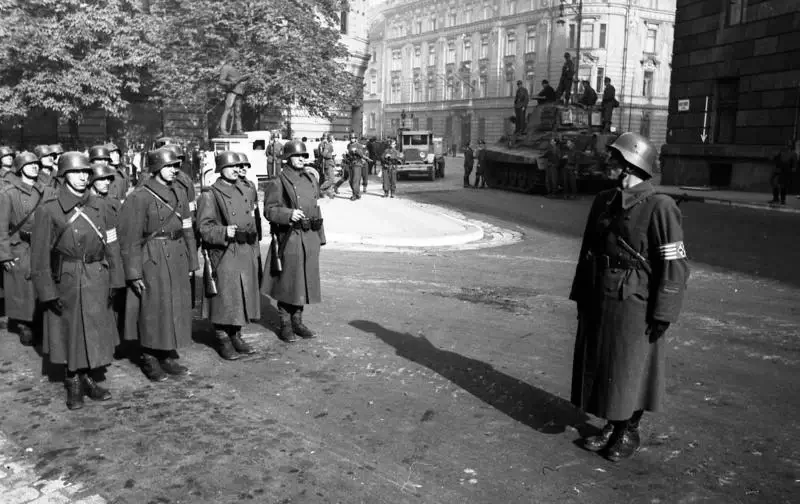
To understand Raoul Wallenberg, you first have to understand the city he entered. In March 1944, Nazi Germany occupied Hungary, and the situation for Hungarian Jews deteriorated with frightening speed. Deportations expanded rapidly, and the rail network became an instrument of mass murder rather than transport. The crisis was not only violent, but also administrative, because it was carried out through lists, schedules, orders, and railway timetables.
The process was organized, not chaotic. Officials identified families, gathered them, moved them, and sent them toward Auschwitz with bureaucratic precision. That made the danger harder to resist because it was built into procedures, paperwork, and schedules. By the time Wallenberg arrived, the deportation system already had momentum, and every hour mattered.
Budapest itself was not yet fully emptied, but it was no longer safe. The Jewish population faced arrest, forced movement, and increasing violence as the political climate hardened. In October 1944, the Arrow Cross seized power and made the situation even more brutal. At that point, the rescue effort had to survive not only Nazi occupation, but also a violent local fascist regime that escalated the danger inside the capital. That shift turned Budapest into one of the most dangerous places in Europe for Jews who were still alive.
Nazi Occupation and the Deportation Machine
The occupation of Hungary in March 1944 did not simply change the flag over Budapest. It changed the pace of persecution. Deportation became a system with clear steps, and those steps were enforced through the railway network, local administration, and direct violence. The efficiency of the process made it more dangerous because it left very little room for hesitation.
Families were identified, moved, and loaded into transports with disturbing regularity. The system depended on people obeying orders quickly, which is why interruptions mattered so much. Wallenberg later built his rescue work around that single weakness.
Why Budapest Was Still Dangerous
Budapest was still home to a large Jewish population when Wallenberg arrived, which made it both a target and a last chance. Many Jews had already been deported from other parts of Hungary, so the capital became one of the final places where rescue still had a realistic chance of success. That narrow window mattered because it meant intervention could still change outcomes.
When the Arrow Cross took power later in 1944, the capital became even more dangerous. The city shifted from deportation under occupation to direct street level terror, and that made every protective document and every safe house more valuable. Survival was no longer about certainty. It was about time.
Who Raoul Wallenberg Was
Raoul Wallenberg was a Swedish businessman and diplomat who arrived in Budapest in July 1944 with support from the Swedish government and the United States War Refugee Board. He was not a soldier, and he did not arrive with weapons or troops. What he brought instead was diplomatic status, organizational discipline, and a willingness to use every legal and political opening available to him. That combination made him unusually effective in a city where ordinary rescue methods had already failed.
His mission did not begin from zero. The Swedish legation in Budapest had already issued some protection documents before his arrival, but the operation was too limited for the scale of the crisis. Wallenberg expanded it, made it more systematic, and pushed it into a full rescue network. That is an important distinction because it shows that his story is not only one of personal courage, but also of operational leadership. He was helping to turn a small diplomatic effort into a large humanitarian response.
He worked with other diplomats and with support from the War Refugee Board, which had been created in 1944 to help rescue civilians threatened by Nazi persecution. Wallenberg became the most visible figure in Budapest, but he was part of a wider humanitarian effort that depended on coordination, trust, and speed. His role mattered because he knew how to move through both bureaucracy and crisis at the same time.
The War Refugee Board and the Rescue Mandate
The United States War Refugee Board was created in 1944 to support rescue efforts for civilians threatened by Nazi persecution. In Budapest, that support helped give Wallenberg the political backing and practical resources needed to scale up the rescue operation. The mandate was humanitarian, but the execution had to be intensely practical.
Wallenberg was not acting as a lone savior. He was the visible face of a broader rescue effort that depended on diplomacy, funding, and international pressure. That broader context makes his work more credible and more historically accurate.
Swedish Neutrality as a Diplomatic Weapon
Sweden’s neutrality during World War II gave Wallenberg leverage that Nazi and Hungarian officials could not completely ignore. Because Sweden was not a belligerent power, its diplomatic claims carried a different kind of weight. Wallenberg used that neutrality to force hesitation in a system that depended on compliance.
That hesitation was not dramatic, but it was useful. A few seconds of uncertainty could create a gap, and a gap could become a life saved. Wallenberg understood that the real contest was not just between good and evil. It was between speed and interruption.
How Protective Passports Worked
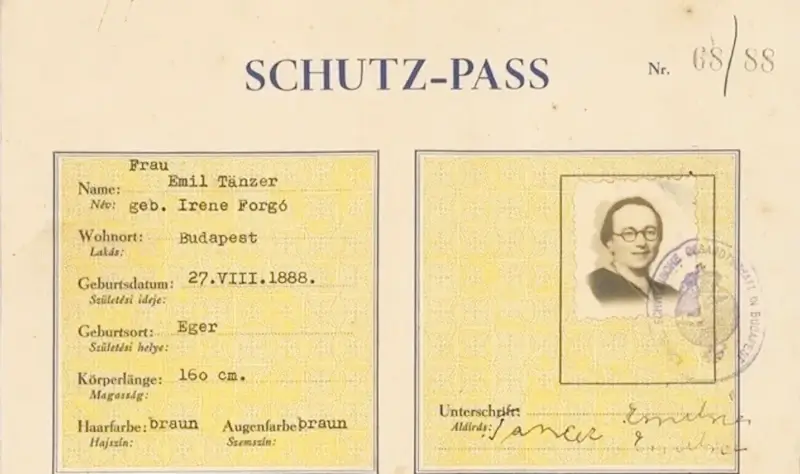
The heart of the rescue operation was the protective passport, also known as the Schutz-Pass. These papers stated that the holder was under Swedish protection and awaiting repatriation. On the surface, they were documents. In practice, they were a shield created out of neutrality and diplomatic pressure. In a system that relied on fear and speed, a single paper could create just enough uncertainty to save a life.
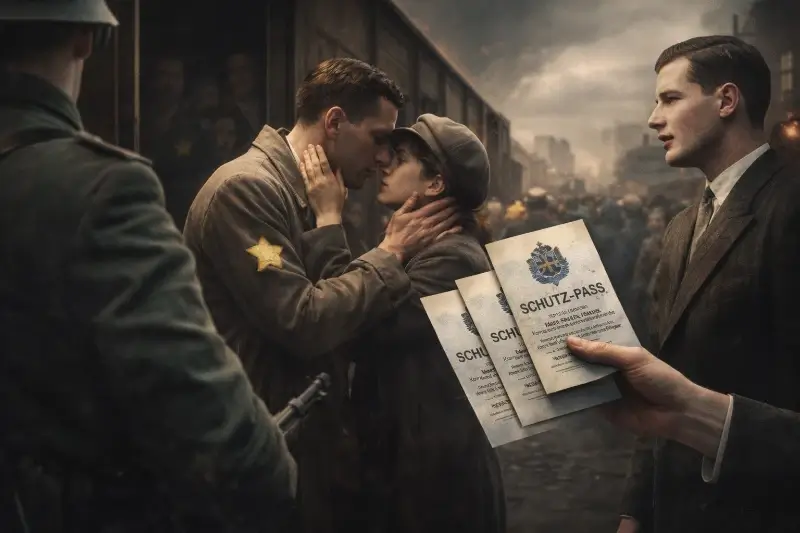
Sweden was not at war with Germany, and that neutrality gave Wallenberg leverage. Nazi and Hungarian officials often hesitated when confronted with a document that could create diplomatic trouble. That hesitation was narrow, but it was enough. In a deportation system built on speed, even a short pause could save a life. Wallenberg understood that hesitation was not weakness by accident, but a gap that could be exploited deliberately.
Wallenberg and his team distributed these passports at scale. The goal was not to make a symbolic gesture. The goal was to create a real protection system that could stand between a person and a transport list. Every passport was a claim, every stamp was a delay, and every delay gave someone a chance to survive another day. That is why the Schutz-Pass became one of the most important rescue tools used in Budapest.
What the Schutz-Pass Claimed
The Schutz-Pass claimed that its bearer was under Swedish protection and awaiting repatriation. That claim mattered because it inserted a neutral state into a deportation process that wanted no interruption. The document did not guarantee safety on its own, but it created a claim that could be used in the right moment.
In practice, that meant Wallenberg could present the pass at the point of danger and demand recognition. The power of the document came from the combination of legality, diplomacy, and urgency. It was paper, but it was paper backed by a country and a diplomat willing to use it.
Why the Passes Worked in Practice
The passes worked because Nazi and Hungarian officials did not always want to create diplomatic trouble with a neutral country. Some officers hesitated, some were overwhelmed by the scale of the operation, and some simply did not want the complication. Wallenberg exploited that hesitation again and again.
The rescue operation became effective because the passes were used repeatedly, not occasionally. Their value came from scale and repetition. Each document created another obstacle for deportation, and each obstacle bought time for another person to survive.
Key Points About the Passports
- They claimed Swedish protection for the bearer.
- They relied on Sweden’s neutrality.
- They worked by creating hesitation inside a deportation system.
- They were issued at scale, not as isolated gestures.
- They became effective because Wallenberg pushed them into daily use, not only formal use.
The Rescue Network in Budapest
Wallenberg did not rely on documents alone. He also helped organize protected houses across Budapest, which became temporary refuges for Jews facing arrest or deportation. These buildings were marked as Swedish protected spaces, and they gave thousands of people a place to hide while the city became more dangerous by the day. The rescue network mattered because it created structure in a city where structure had been turned against survival.
The conditions inside these houses were difficult. Food was limited, space was crowded, and the threat of raids never disappeared. Yet they still mattered because they created time and distance between vulnerable people and the forces trying to seize them. That is one of the defining features of Wallenberg’s mission. He did not promise perfect safety. He created enough protection to interrupt the worst outcome, and in Budapest in 1944, that was enough to change lives.
This rescue network also depended on constant movement. Wallenberg and his colleagues had to move documents, identify people at risk, and respond quickly to changes in the situation. Rescue in Budapest was never static. It was an ongoing race against arrest, transport, and violence. The network worked because it remained flexible, and because it treated every day as a chance to save more people.
Protected Houses as Safe Havens
The protected houses functioned as temporary safe havens under Swedish designation. They were not perfect sanctuaries, but they were significantly safer than the streets, detention sites, or transport lines. For many people, that difference was enough to keep them alive through the most dangerous months.
What made them effective was not comfort but recognition. Their protected status forced at least some officials to hesitate before entering or removing people. That hesitation was small, but in wartime Budapest small margins mattered.
Daily Life Under Protection
Life inside the safe houses was shaped by uncertainty. Overcrowding, hunger, and fear were constant, and no one could assume the protection would hold forever. People inside them were surviving, not living normally.
Even so, the houses created a kind of continuity. They gave families a place to wait, to hope, and to remain out of the deportation line for a little longer. In a city where time had become a weapon, that mattered deeply.
Raoul Wallenberg and the Risk of Direct Intervention
Paperwork alone could not always stop deportation. That is why Raoul Wallenberg also went to the places where people were being collected, loaded, or marched away. He intervened at transport points, at death marches, and at moments when deportation was about to become irreversible. These were not symbolic gestures. They were direct actions taken inside a system that was actively trying to remove people from sight.
This was the most dangerous part of his work because it placed him directly in front of armed men who were enforcing Nazi and Arrow Cross policy. He had to speak with authority, act quickly, and make his documents believable enough to force a pause. Sometimes he succeeded because the guards hesitated. Sometimes he succeeded because the system was already overloaded. Sometimes he succeeded because he refused to back down. That mixture of timing, confidence, and diplomatic leverage became one of the defining features of the rescue operation.
The human stakes were immediate. Families were being separated. Children were being moved into danger. Exhausted people had to trust that a diplomatic claim could still matter in a city that had become hostile to survival. Wallenberg’s interventions were not theatrical. They were practical acts of resistance carried out in real time. Each successful intervention meant one more person, one more family, one more chance to stay alive.
Interventions at Transport Points
At transport points, Wallenberg’s task was to interrupt the moment when movement became irreversible. He used Swedish protection claims to challenge deportation at the exact point where officials were trying to move people out of reach. That made the intervention highly risky, but also highly effective when it worked.
These confrontations mattered because transport sites were the places where bureaucracy turned into disappearance. Wallenberg stepped into that threshold and insisted on another outcome. That was rescue in its most immediate form.
Death Marches and Emergency Pullbacks
As conditions worsened, many Jews were forced into death marches under brutal conditions. Wallenberg intervened in those marches by identifying people under Swedish protection and demanding their release. These were emergency actions, and they often took place when people were already exhausted and near collapse.
When those pullbacks succeeded, they saved people from a path that could easily have ended in death. The fact that Wallenberg acted in those moments shows how much of the rescue depended on speed, nerve, and the refusal to accept that the situation was already lost.
Arrow Cross Violence and the Human Cost of Survival
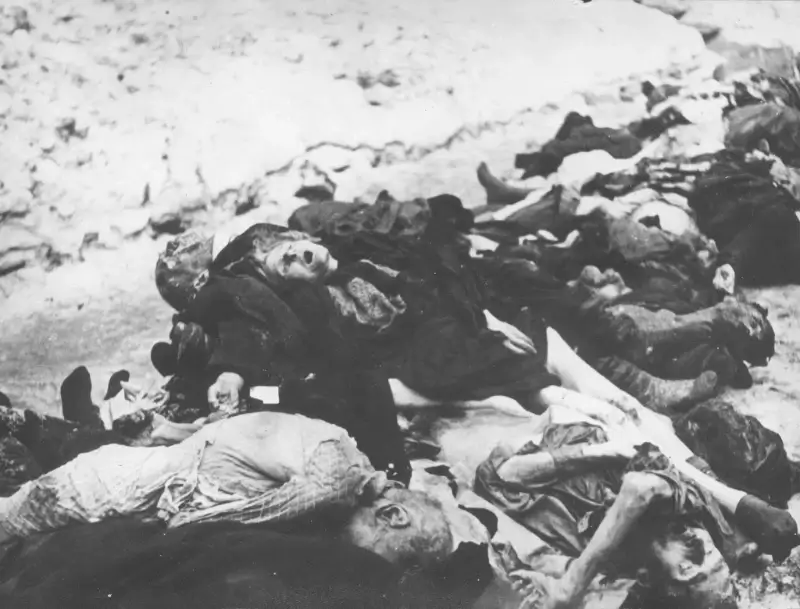
When the Arrow Cross came to power in October 1944, the rescue effort entered its most brutal phase. The Arrow Cross was a fascist movement that intensified anti Jewish violence in Budapest, including forced marches, street killings, and mass intimidation. The city became even more unstable, and survival became harder for everyone under threat. At that point, every protected house and every valid document had to operate inside a much harsher reality.
The people Wallenberg tried to protect were already living under severe stress. They faced hunger, exhaustion, disease, and the constant fear of raids. Many had already lost family members or had been separated from them during earlier deportations. In that environment, a protected house or a valid passport was not just a form of paperwork. It was a line between life and death, and everyone involved understood that the line could break at any moment.
Wallenberg’s mission also shows the emotional burden of rescue. He had to keep acting while knowing that each success was partial and each failure could be fatal. The rescue effort was built on urgency, but it was also built on repetition. The same kind of intervention had to be repeated again and again because the threat kept returning. That constant pressure is one reason his work remains so compelling to historians and readers alike.
Who the Arrow Cross Were
The Arrow Cross was a Hungarian fascist movement aligned with Nazi ideology, and its takeover made Budapest far more violent. Once in power, its members intensified persecution through raids, executions, and forced marches. The group’s rule turned the capital into a place where terror was visible on the streets.
This shift mattered because it changed the nature of Wallenberg’s work. The danger was no longer only bureaucratic deportation. It became direct, immediate, and public violence, which made every act of rescue more urgent.
Survival Under Street-Level Terror
For the people inside Budapest, survival meant living under constant uncertainty. Families could be displaced in a single night, and even protected spaces could be threatened by raids or violence. The emotional strain of that existence was enormous.
That is why Wallenberg’s work cannot be reduced to documents alone. It was a response to a human emergency, and it had to function in a city where fear had become part of everyday life.
The Soviet Arrival and Wallenberg’s Disappearance
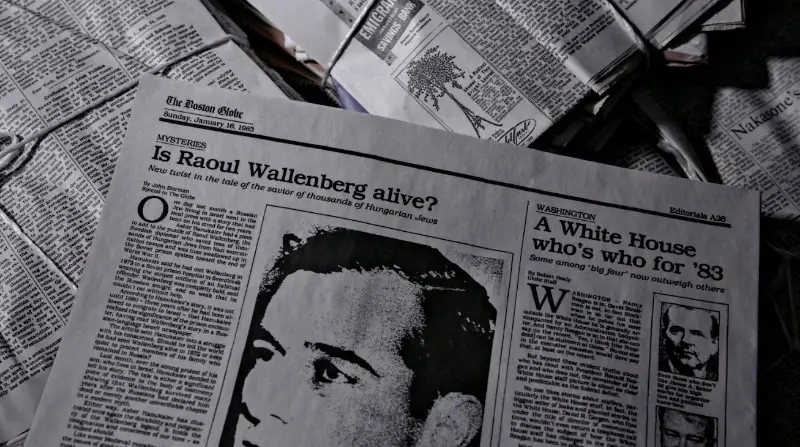
In January 1945, Soviet forces entered Budapest. For many residents, the arrival of the Red Army meant the collapse of Nazi control. For Wallenberg, it marked the beginning of a new and unresolved tragedy. The rescue mission had survived the Nazi system, but it now faced a different political reality that he could not control.
He went to meet Soviet authorities, likely to discuss protection and postwar arrangements. After that, he disappeared. Historical records indicate that he was detained by Soviet forces in January 1945, and Soviet authorities later gave conflicting explanations about his fate. Some claims suggested he died in prison in 1947, but no final, universally accepted answer has ever resolved the case. The lack of certainty has kept his disappearance in public memory for decades.
That uncertainty is part of what makes his story so haunting. A man who had spent months saving lives through precision and courage then vanished into a system that offered little clarity and no closure. His disappearance remains one of the most enduring mysteries of World War II. It also stands as a reminder that survival in wartime often depends on political forces beyond the battlefield.
What Happened After January 1945
After Soviet forces entered Budapest, Wallenberg went to meet them, likely in the hope of continuing humanitarian work and protecting the people he had saved. Instead, he was detained by Soviet authorities. That arrest removed him from public view and ended his direct role in the rescue effort.
The historical record after that point becomes much less clear. The absence of a definitive account is one reason his story still attracts attention more than seventy years later.
Why the Fate Remains Unresolved
Soviet authorities later gave conflicting accounts of what happened to Wallenberg, including claims that he died in prison in 1947. However, historians have never reached a universally accepted conclusion, and the lack of complete documentation has kept the question open.
That unresolved fate matters because it adds a final layer of uncertainty to a life already defined by danger and risk. Wallenberg saved lives in a system built to erase them, and then he disappeared into another system that refused clarity.
Why Raoul Wallenberg Still Matters
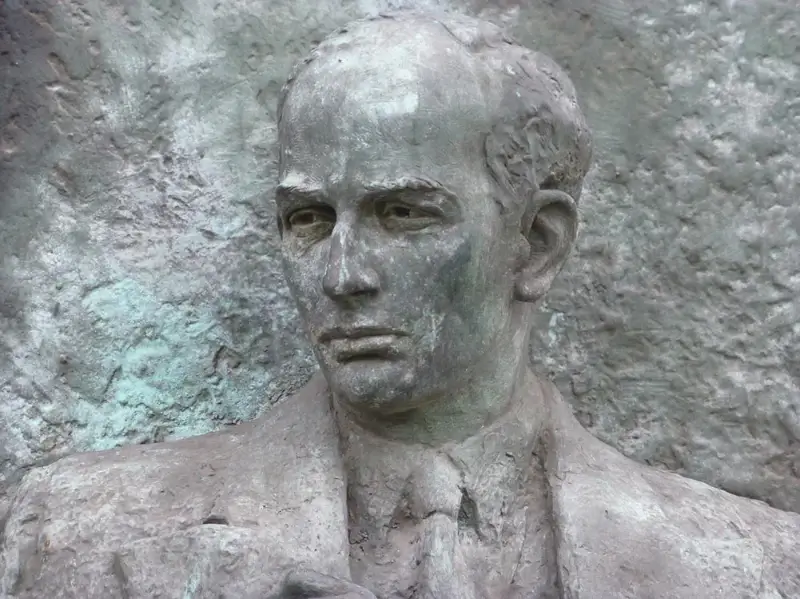
Raoul Wallenberg matters because he proved that even within a system designed for mass murder, individual action could still make a measurable difference. He did not stop the Holocaust. He did not defeat Nazi Germany. What he did was more specific and, in many ways, more difficult. He found the weak points inside a bureaucratic killing machine and used them to protect human lives. That makes his story one of the clearest examples of rescue through strategy rather than force.
That lesson still matters because it shows how power can be challenged through timing, paperwork, diplomacy, and stubborn moral clarity. It also shows that rescue often depends on people who are willing to act before the situation becomes fully irreversible. Wallenberg did not wait for a perfect solution. He used the tools he had, then used them again, until thousands of people had a better chance to survive. His example remains relevant because it speaks to both courage and method.
His legacy endures because it is both historical and practical. It is about courage, but it is also about method. It is about a Swedish diplomat in Budapest, but it is also about the way systems can be interrupted when someone understands how they work. That is why the name Raoul Wallenberg still carries such weight in Holocaust history, humanitarian memory, and modern discussions of moral responsibility.
The Scale of the Rescue
Raoul Wallenberg is credited with saving tens of thousands of Jews in Budapest, and some estimates reach around 70,000. The exact figure varies by source, but the scale of the rescue is not disputed. His work was one of the largest humanitarian interventions of the Holocaust.
That scale is important because it shows that the rescue was not symbolic. It changed outcomes for a very large number of people, and that is why historians continue to treat it as a major historical event rather than a personal gesture.
Lessons from Wallenberg’s Strategy
Wallenberg’s strategy focused on disruption rather than confrontation. He used documents, diplomacy, and rapid response to slow down a system that depended on speed. That approach worked because it targeted the structure of persecution rather than trying to fight it with force.
His story shows that resistance can be practical, disciplined, and deeply human at the same time. It also shows that moral courage often depends on method, not just intention.
Conclusion
Raoul Wallenberg entered Nazi occupied Budapest when the city was already closing around its victims. He used protective passports, protected houses, and direct intervention to save tens of thousands of Jews, then disappeared into Soviet custody after the war turned again. His story remains powerful because it combines danger, intelligence, and moral action in a way that still feels urgent today. It also shows how one diplomat, operating under extreme pressure, could still alter the fate of thousands.
The name Raoul Wallenberg still matters because it reminds us that history is not only shaped by armies and governments. Sometimes it is shaped by one person standing at the right place, at the right time, with the courage to say that a life still has protection. That is why his legacy continues to stand out among the great rescue stories of the Holocaust, and why his story still deserves to be read carefully.
Timeline
- March 1944, Nazi Germany occupies Hungary.
- July 1944, Raoul Wallenberg arrives in Budapest.
- Mid to late 1944, protective passports and protected houses expand the rescue network.
- October 1944, the Arrow Cross takes power and violence escalates.
- January 1945, Soviet forces enter Budapest.
- January 1945, Wallenberg is detained by Soviet authorities.
Key Facts
- Raoul Wallenberg was a Swedish businessman and diplomat.
- He worked in Budapest during 1944 and early 1945.
- His main rescue tools were protective passports and protected houses.
- He helped save tens of thousands of Jews in Nazi occupied Hungary.
- His final fate remains unresolved after his detention by Soviet authorities.

Add your first comment to this post