

Imagine a man standing alone on a barren, windswept island in the middle of the South Atlantic. Waves crash violently against steep cliffs, a constant reminder of the vast distance between him and the empire he once ruled. This isolated island is St. Helena, the final exile of Napoleon Bonaparte.
Just years earlier, Napoleon Bonaparte commanded armies that reshaped Europe. Kings fell at his orders, borders vanished under his authority, and the political landscape of the continent was redesigned in his image. His journey—from revolutionary general to emperor—remains one of the most dramatic transformations in world history.
This is the story of the rise and fall of Napoleon Bonaparte during and after the French Revolution—and the heavy price of unmatched ambition.
Table of Contents
The French Revolution: Chaos That Created Opportunity
The rise of Napoleon Bonaparte cannot be understood without examining the turmoil of the French Revolution.
In the late 18th century, France erupted into political upheaval. Monarchy, aristocracy, and centuries-old traditions were dismantled in the streets of Paris. What began as a movement for liberty quickly turned into a period of violence, civil war, and mass executions.
Key consequences of the French Revolution included:
- The collapse of royal authority
- The rise of radical political factions
- Fear among European monarchies
- Continuous wars between France and foreign coalitions
Across Europe, royal courts feared revolutionary ideas spreading beyond France. Nations formed alliances not only to defeat France militarily, but to destroy the revolutionary ideology itself.
In this chaos, Napoleon Bonaparte found his moment.
From Corsican Outsider to Military Genius
Napoleon Bonaparte was born in 1769 in Ajaccio, Corsica—an island recently annexed by France. Far from Parisian elite circles, his path to power seemed unlikely.
Despite modest origins, Napoleon’s family secured him admission to French military academies. There, he demonstrated exceptional skill in:
- Mathematics
- Artillery strategy
- Tactical planning
However, he faced prejudice due to his Corsican accent and outsider status. This only intensified his determination.
During the 1790s, amid the ongoing French Revolution, Napoleon Bonaparte gained command of French forces in Italy. His victories stunned Europe. With underfunded troops, he defeated larger armies and forced powerful nations—like Austria—into negotiations.
Napoleon began treating warfare like a calculated equation—an approach that became a hallmark of his leadership style.
Seizing Power After the French Revolution
While Napoleon was winning battles abroad, France’s government—the Directory—was collapsing due to corruption and political instability.
In November 1799, Napoleon Bonaparte supported a coup that overthrew the failing regime. The result was the creation of the Consulate, placing Napoleon at the center of power.
By 1804, his authority reached its peak.
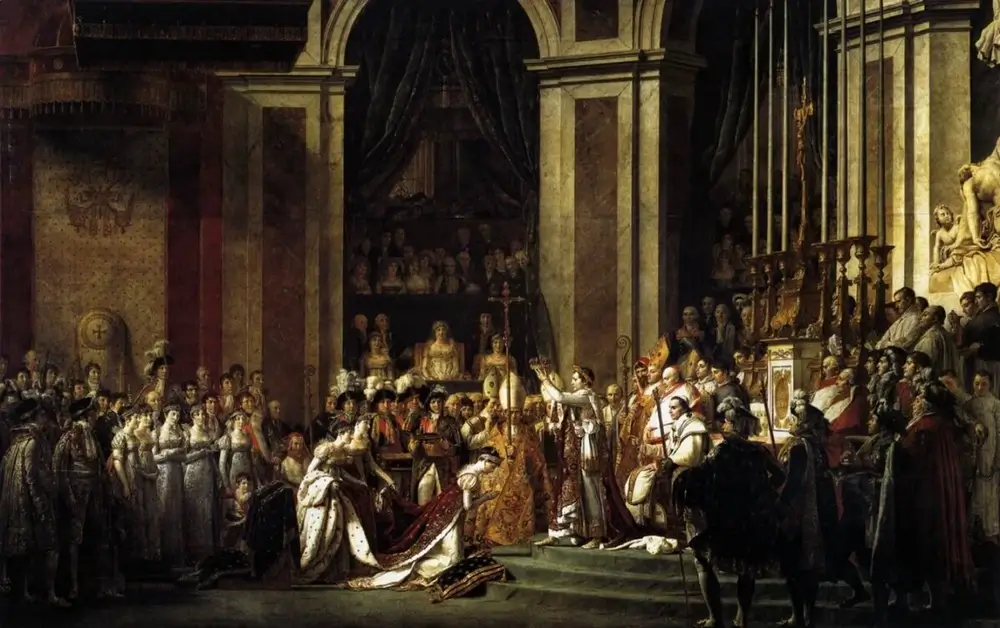
Inside Notre Dame Cathedral, Napoleon performed a symbolic act that shocked Europe—he crowned himself Emperor of the French. By taking the crown from the Pope and placing it on his own head, he declared that his power came from achievement, not tradition.
This moment marked the transformation of revolutionary France into a powerful empire.
Napoleon Bonaparte Reshapes Europe
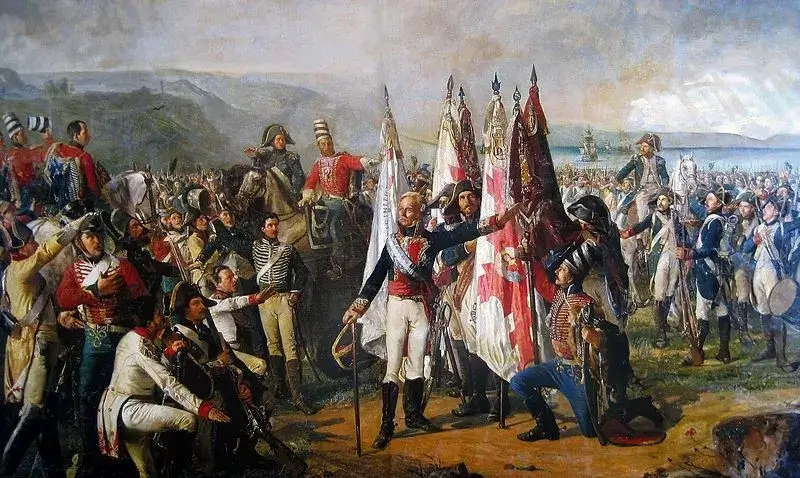
As Emperor, Napoleon Bonaparte dominated continental Europe. His empire extended across vast territories, reshaping nations and governments.
Major transformations included:
Redrawing Borders
Centuries-old kingdoms disappeared as Napoleon reorganized territories to suit his political vision.
Creating New States
New political entities were formed across Europe, often ruled by Napoleon’s relatives.
Introducing the Napoleonic Code
One of his most enduring achievements, this legal system:
- Ended feudal privileges
- Promoted legal equality
- Encouraged merit-based advancement
Even today, many modern legal systems reflect principles from the Napoleonic Code.
The Continental System and the Limits of Power
Despite dominating land warfare, Napoleon Bonaparte faced a formidable rival—Britain.
Unable to defeat the British navy, Napoleon introduced the Continental System, a massive trade blockade designed to cripple Britain’s economy.
However, the strategy created unintended consequences:
- Economic hardship across Europe
- Resistance from allied nations
- Growing hostility toward French rule
Napoleon’s ambition began to stretch his empire beyond sustainable limits.
The Fall of Napoleon Bonaparte
Years of warfare drained resources and weakened loyalty across Europe.
By 1814:
- Coalition forces invaded France
- Paris fell
- Napoleon Bonaparte abdicated the throne
He was exiled to the Mediterranean island of Elba. Yet his story was not finished.
In 1815, Napoleon escaped and returned to France, initiating the dramatic period known as the Hundred Days.
The Battle of Waterloo: The Final Defeat
Napoleon Bonaparte at the Battle of Waterloo
The final chapter of Napoleon Bonaparte’s military career occurred on June 18, 1815, at the Battle of Waterloo.
Rain soaked the battlefield, turning soil into deep mud. For hours, French forces attacked Allied positions. Victory seemed possible—until reinforcements arrived for Napoleon’s enemies.
The French army collapsed.
Waterloo ended Napoleon Bonaparte’s reign permanently.
Exile on St. Helena and the Legacy of Napoleon Bonaparte
After Waterloo, Napoleon Bonaparte was exiled again—this time to St. Helena, a remote island chosen specifically to prevent escape.
Under British supervision, he spent his final years:
- Writing memoirs
- Reflecting on his achievements
- Shaping how history would remember him
Napoleon died in 1821.
After his death, European leaders gathered at the Congress of Vienna to restore old borders. Yet many of Napoleon’s reforms—especially legal and administrative ones—remained in place.
Today, historians still debate his legacy:
- Visionary reformer
- Strategic genius
- Ambitious conqueror
In many ways, he was all three.
Key Lessons from Napoleon Bonaparte and the French Revolution
The life of Napoleon Bonaparte offers powerful historical insights:
1. Meritocracy Can Reshape Society
Napoleon’s rise showed that skill and intelligence could overcome social barriers.
2. Strategy Drives Leadership
His mathematical approach to warfare transformed military planning.
3. Overexpansion Leads to Collapse
Even the strongest empires fall when stretched beyond capacity.
4. Ideas Outlast Empires
The Napoleonic Code continues influencing legal systems worldwide.
Internal and External Linking Opportunities
To strengthen SEO authority:
Suggested Internal Links:
- French Revolution timeline guide
- History of European empires
- Military strategy in the Napoleonic Wars
Suggested External Links:
- Encyclopaedia Britannica – Napoleon Bonaparte
- National Archives – French Revolution documents
- British Museum historical collections
Conclusion: The Lasting Impact of Napoleon Bonaparte
Napoleon Bonaparte believed that a single individual could reshape history—and for a time, he succeeded.
His journey from the turmoil of the French Revolution to the throne of Europe remains one of the most powerful historical narratives ever recorded. Though his empire collapsed, his reforms reshaped modern governance, law, and military strategy.
Few figures in history have influenced the world so dramatically—or paid such a high price for ambition.
Want to see the full story unfold with detailed battle maps and cinematic visuals?
And if you’re fascinated by powerful historical figures like Napoleon Bonaparte, subscribe to The Flash Archive for more epic stories that shaped the world.

Add your first comment to this post