
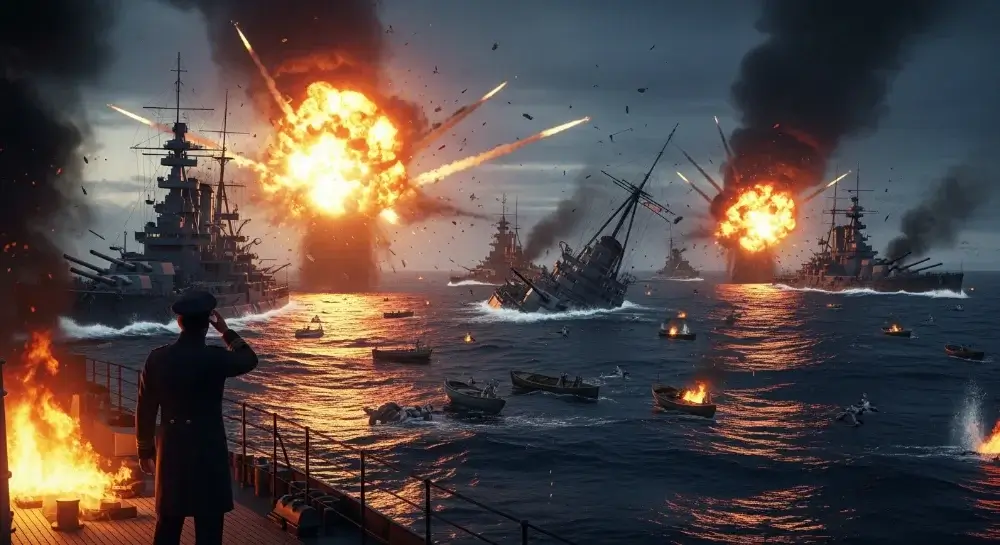

In naval battle history, commanders expect chaos—but not collapse in minutes. Yet one confrontation stands out as a naval disaster in history so swift that contemporaries called it unimaginable: a well-equipped fleet effectively destroyed in 6 minutes. This is the story of how a confident command, a string of tactical errors, and a rapid chain reaction produced one of the harshest maritime battle disasters the sea has known.
The narrative below traces the battle chronologically. It explains the strategic choices, the battle sequence, the rapid timeline of destruction, and the long-term lessons for naval warfare history.
Table of Contents
The Historical Context
Naval power dominated global politics in the era leading to this clash. Nations built larger ships and refined naval warfare tactics to control trade routes and secure colonies. In that climate, fleets stood as national capital and military insurance.
Technological advances changed the nature of sea combat. Armor improved. Guns grew longer. Communication between ships remained fragile, but commanders relied on signal flags, lights, and prearranged plans.
This period shaped fleet battle strategy: formations, concentrated fire, and coordinated maneuvers. Yet even modern fleets remained vulnerable to rapid, compounding failures—especially under surprise, poor visibility, or technological limits.
The Commander and His Fleet
The fleet commander had experience and confidence. He commanded several historical warships: battleships, cruisers, and fast escorts. He organized his vessels into a cohesive formation. Each ship had a defined role.
- Battleships formed the center and delivered heavy salvos.
- Cruisers scouted and screened.
- Escorts protected against torpedo and destroyer attacks.
The commander believed in decisive engagement. He planned to close the distance, use gun superiority, and break the enemy line. He expected disciplined gunnery and reliable signaling. In short: he relied on naval commander strategy grounded in doctrine.
What he could not predict were small mistakes, unlucky timing, and how fast a firefight could cascade into catastrophe.
Tension on the Water
Both fleets sighted each other at dawn. Lookouts reported silhouettes. Captains ordered battle stations. Signalmen prepared flags. The sea smelled of oil, salt, and tar.
The engagement began with long-range salvos. Gunnery crews adjusted range and elevation. Smoke and flame marked each hit. On deck, officers shouted orders. The commander watched the horizon and relayed commands.
At first, the battle resembled many military history naval battle accounts: disciplined formations, alternating salvos, and cautious maneuvers. Yet small indicators foreshadowed disaster: a misread signal, a delayed order, and a poorly timed turn.
The Six Minutes That Changed Everything
Minute 0–1: First Critical Hits
An enemy salvo found its mark early. One battleship took a direct hit near a magazine. Officers ordered firefighting teams. Sailors raced to contain the flames.
The hit disabled key communications. The flagship lost its ability to coordinate the formation. The commander ordered a turn to reorganize. That maneuver introduced vulnerability.
Minute 1–3: Chain Reaction Begins
The turn placed vulnerable broadsides toward concentrated enemy fire. Shells struck multiple hulls. Fires spread quickly. Powder rooms and secondary magazines became exposed.
Explosions can propagate in seconds. In this case, one magazine detonation caused shock that ruptured fuel tanks on adjacent ships. Crews evacuated. Smoke reduced visibility to near zero. Command signals failed entirely.
Minute 3–4: Formation Breaks
With visibility poor and communications down, coordination collapsed. Some ships attempted to flee. Others slowed to repair damage. The formation dissolved into individual targets. The enemy exploited this. They focused fire on isolated ships.
Minute 4–6: Final Destruction
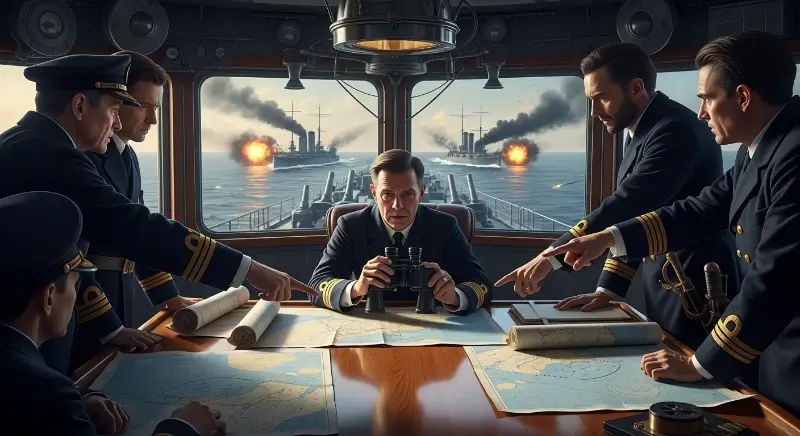
By minute six, multiple warships were destroyed. Fires reached structural bulkheads. Several heavy vessels sank or lost propulsion. Survivors clung to rafts and debris. The commander watched from his bridge, powerless to reassemble his fleet. In under six minutes, a disciplined formation became a scattered graveyard.
This rapid sequence illustrates how a single catastrophic hit, compounded by tactical missteps and technical failures, produced a naval fleet disaster unlike most recorded battles.
Key Strategic Errors (Why the Fleet Fell)
The disaster did not happen by chance. Several strategic errors and vulnerabilities combined to produce the worst outcome:
- Rigid formation: The fleet’s tight formation prioritized firepower but reduced maneuverability. When damage occurred, ships could not separate quickly.
- Overreliance on centralized signaling: The commander depended on the flagship for orders. When the flagship lost comms, the fleet lacked contingency signals.
- Poor damage control readiness: Crews lacked rapid magazine flood procedures and redundancy for pumps. Fires spread faster than teams could extinguish.
- Predictable maneuver: The turn to reorganize followed a standard doctrine. The enemy anticipated the move and concentrated fire at that moment.
- Inadequate intelligence on enemy capabilities: The commander underestimated the enemy’s range accuracy and munitions types.
Each error alone was dangerous. Together, they created a military strategy failure that turned a routine engagement into a catastrophic event.
What Naval Warfare Tactics Failed?
A closer look at naval warfare tactics reveals where doctrine and reality diverged:
- Formation versus dispersion: Doctrine favored tight lines for decisive broadside. In the face of modern high-explosive shells and faster-fusing ammunition, dispersion would have reduced the risk of magazine chain detonations.
- Command redundancy: Modern naval tactics emphasize decentralized initiative when signals fail. This fleet retained centralized control, which collapsed when comms failed.
- Damage control training: Fast, automated flooding and better compartmentalization reduce catastrophic magazine explosions. The fleet’s older designs lacked such features.
- Situational awareness tools: Radar and long-range spotting could have provided early warning. The existing sensory limits left the fleet blind to incoming salvo patterns.
These tactical gaps illustrate how naval warfare history evolved: navies learned quickly from such sea battle tragedies and adapted ship design, training, and doctrine.
Aftermath: Casualties, Inquiry, and Reform
In the immediate aftermath, rescuers recovered survivors and tended wounded. Investigations followed. Naval boards examined logs, signals, and damage reports. They sought to understand how a competent fleet fell so fast.
Reports highlighted the same issues: formation rigidity, communication failure, and inadequate damage control. The boards recommended reforms:
- Decentralize command protocols.
- Improve magazine protection and automatic flooding.
- Train crews for rapid compartmentalization and firefighting.
- Adjust fleet formations to prioritize survivability in high-explosive environments.
These reforms reshaped naval warfare history. Shipbuilders increased compartmentalization. Admirals revised tactics. The lessons became standard in naval academies.
Long-Term Impact on Naval Warfare
The fleet destroyed in 6 minutes left a lasting mark on military thinking. Its consequences included:
- Design changes: Naval architects prioritized internal protection and redundancy.
- Doctrine shifts: Fleets adopted more flexible formation tactics and contingency signaling.
- Training emphasis: Navies placed stronger focus on damage control and autonomous ship command.
- Strategic caution: Commanders weighed aggressive maneuvers against survivability more carefully.
In this way, a historical naval battle that began as a local tragedy influenced global naval warfare history. The sea demands adaptability. Navies that learn avoid repeating catastrophic mistakes.
Lessons Learned
From this maritime battle disaster, several clear lessons emerge for students of history and strategy:
- Redundancy saves lives. Multiple command channels reduce collapse risk.
- Survivability can trump concentration of firepower. Dispersed formations mitigate chain detonations.
- Training and drills for damage control are essential. Well-drilled crews contain fires faster.
- Technology must pair with doctrine. New weapons require revised tactics.
These lessons translate beyond the navy. They apply to any organization that faces high-risk operations and cascading failures.
Conclusion
The story of a commander who watched his fleet die in six minutes remains one of the clearest warnings in naval battle history. This naval disaster in history combined tactical rigidity, technical vulnerabilities, and the brutal speed of modern munitions to produce a fleet destroyed in 6 minutes. The event reshaped naval warfare history by forcing reforms in ship design, command structure, and training.
The sea preserves harsh lessons. Commanders who study this historical naval battle do more than remember loss; they adopt changes that save ships and lives. In the end, the tragedy became a turning point—one that moved maritime strategy from rigid doctrine toward resilient adaptability.

Add your first comment to this post