
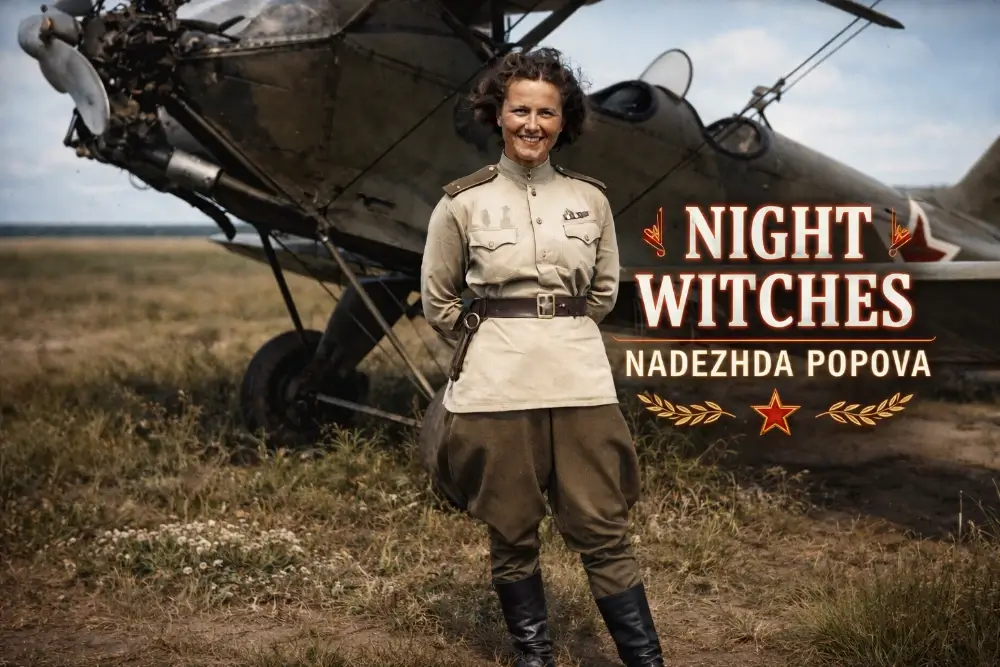

The night sky over the Eastern Front was never truly empty. Searchlights swept across the black, anti-aircraft fire climbed toward the clouds, and somewhere beyond the flashes a small Soviet biplane drifted in with its engine cut. For a moment, the aircraft was almost silent. Then came the bombs, the sudden impact, and the retreat back into darkness before the defenders below could properly answer. That is how the Night Witches fought: not by overpowering the enemy in the air, but by appearing, striking, and vanishing before fear could settle into routine.
At the center of that story stands Nadezhda Popova, one of the most celebrated pilots in the regiment. She flew 852 combat missions, including 18 in a single night, and became one of the war’s best-known Soviet women aviators. Her life and the unit she served in reveal something larger than a wartime curiosity. They show how the Soviet Union, under the pressure of invasion, built combat capability from limited tools, limited time, and extraordinary human endurance.
Table of Contents
Quick Context Summary
The Night Witches were an all-female Soviet night bomber regiment created during the emergency of 1941, when Germany’s invasion forced the Soviet Union to expand combat aviation quickly. Their job was harassment bombing: repeated night raids meant to disrupt German troops, destroy supplies, and keep enemy forces exhausted and under pressure. They flew the Polikarpov Po-2, a wood-and-canvas biplane that was outdated in almost every conventional sense but strangely effective in the dark.
Historical Background
The story begins with Operation Barbarossa, Germany’s June 1941 invasion of the Soviet Union. The scale of the attack created immediate military crisis. The Red Army needed trained aircrew fast, and that pressure forced a major shift in Soviet policy toward women in combat aviation. Women who had already learned to fly were no longer just a symbol of possibility. They became a practical solution to an operational emergency. In October 1941, Soviet authorities approved the creation of three women’s air regiments, including the 588th Night Bomber Regiment.
That moment matters because it explains the unit’s existence. The Night Witches were not formed as a novelty or a propaganda gesture alone. They were built because the Soviet war effort was desperate for capable personnel. The Eastern Front was vast, the losses were brutal, and the Soviet command needed every trained flyer it could find. The women who answered that call entered a military culture that still doubted them, but war has a way of making institutions practical when ideology is inconvenient.
Operational Role of the Night Witches
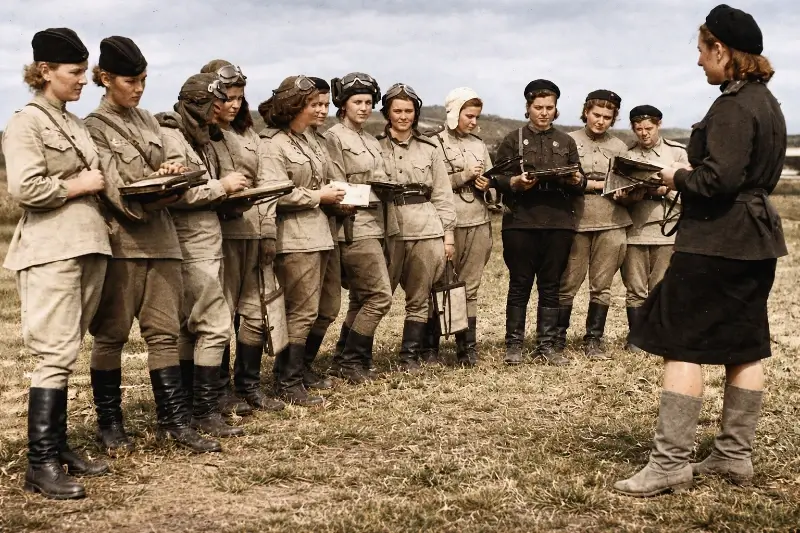
The regiment’s mission was straightforward and relentless: attack German positions at night, interrupt sleep, break up supply lines, and keep enemy troops under constant psychological strain. The National WWII Museum describes the unit’s main purpose as attacking German morale and keeping soldiers sleep-deprived through almost endless bombing raids. That role made the regiment strategically useful even though it flew light aircraft with tiny bomb loads.
This was not strategic bombing in the heavy-bomber sense. It was harassment bombing, a form of warfare built around persistence. One raid would not decide a campaign. Hundreds could influence the rhythm of a front. The Night Witches exploited that principle with ruthless consistency. They struck roads, warehouses, troop concentrations, and other rear-area targets. Their value lay in repetition: every night, the threat returned. Every night, the enemy had to listen for that faint, eerie sound from the sky.
Key Takeaways
- The Night Witches were a harassment-bombing unit, not a heavy-bomber force.
- Their military purpose was disruption, not single-strike destruction.
- Their real weapon was tempo: repeated attacks that wore down the enemy.
Aircraft and Equipment
The aircraft most closely associated with the regiment was the Polikarpov Po-2, a wood-and-canvas biplane originally built as a trainer and utility aircraft. By World War II standards, it was obsolete. It was slow, lightly loaded, and vulnerable. In any conventional air battle, those weaknesses would have been fatal. In night harassment bombing, they became part of the method.
The Po-2’s simplicity mattered. It could fly low, operate from rough strips, and approach without the speed and noise that marked larger combat aircraft. Many accounts describe the regiment’s signature tactic the same way: the crew approached at night, cut the engine, glided toward the target, and released bombs almost silently. The German defenders often heard only the wind moving through the aircraft’s structure. That sound became part of the legend. It also explains why a machine that looked helpless on paper could still terrify the ground below.
Key Takeaways
- Aircraft: Polikarpov Po-2.
- Construction: wood-and-canvas biplane.
- Original purpose: trainer and utility aircraft.
- Combat value: low-speed night operations, rough-field use, and stealthy glide attacks.
Mission Strategy and Enemy Response
The Night Witches’ tactic was built around cause and effect.
Cause: the Soviet Union lacked heavy aviation resources in the right places.
Action: the regiment used light biplanes for repeated night raids.
Result: German troops faced constant disruption, sleep loss, and the stress of not knowing when the next raid would come.
The enemy response was intense because the threat was psychologically unusual. A night raid from a heavy bomber is alarming, but at least it is familiar. A silent glide attack from a tiny biplane is different. It is intimate. It feels close. It feels hard to stop. German soldiers gave the unit the name “Night Witches” because the aircraft’s approach seemed uncanny, as if the women were arriving out of the dark rather than flying through it. The name began as ridicule. It became a lasting historical label because the unit earned it.
The scale of the regiment’s work gives the tactic its weight. The National WWII Museum says the 588th flew more than 24,000 missions. That number matters not only because it is large, but because it shows durability. The regiment was not a one-season phenomenon. It kept operating, night after night, through the long attritional grind of the Eastern Front.
Key Takeaways
- The tactic was engine-off glide bombing.
- The target was not only infrastructure but morale.
- The result was sustained pressure that the German side could not easily neutralize.
Nadezhda Popova’s Wartime Path
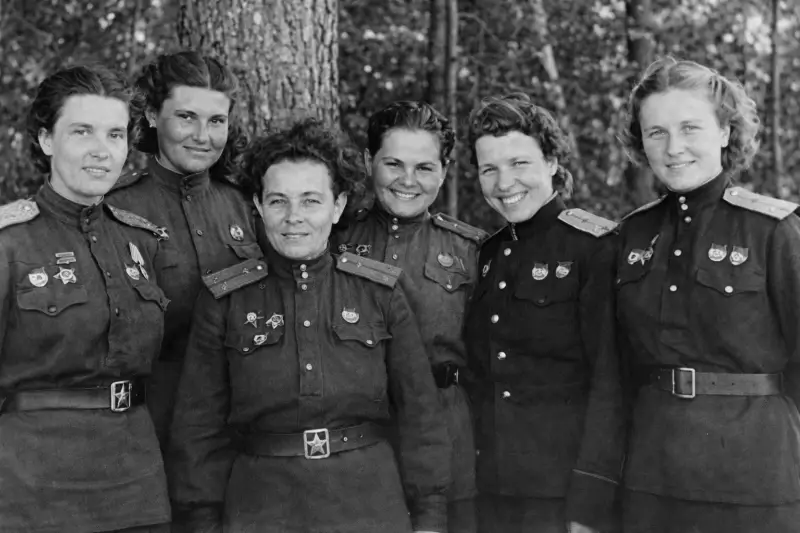
Popova’s own path into the cockpit began before the war. She learned to fly young, trained as a glider pilot, and became a flight instructor before entering combat service. When the Soviet Union opened women’s combat aviation units, she joined the 588th and became one of its most capable pilots. Her wartime record is striking because it reflects both skill and endurance. She did not merely survive the war; she kept flying through it.
Her service also shows how the regiment operated at the human level. Night after night, the crews flew, landed, rearmed, and launched again. Popova’s 852 missions were not the result of one dramatic moment. They were the product of repetition under pressure. According to historical reporting, she once flew 18 missions in a single night. That detail matters because it captures the operational tempo of the unit better than any abstract description could.
The most important thing to understand about Popova is that she was not exceptional in isolation. She was exceptional as part of a system of women who were all being tested under the same harsh conditions. The regiment needed pilots, navigators, mechanics, and commanders who could keep going after fear, fatigue, and cold had done their work. Popova became one of its best-known names because she helped prove the system could work.
Key Takeaways
- Popova was an experienced flyer before joining the regiment.
- She flew 852 combat sorties.
- Her career shows how the Night Witches combined individual skill with collective discipline.
Human Experience and Combat Conditions
The romantic version of the Night Witches story can hide the physical reality, and the physical reality was harsh. The aircraft were open and cold. The missions were repeated. The crews flew at night, in bad weather, over enemy territory, with little margin for error. The women were often issued men’s uniforms that did not fit well, and their gear was far from ideal. The regiment’s endurance was not just tactical; it was bodily.
There was also social pressure. Soviet women flyers were useful to the war effort, but usefulness did not erase prejudice. They still had to prove they belonged in combat aviation, and they did so in a military culture that often treated them as exceptions rather than equals. That is one reason the Night Witches remain so memorable. They did not simply fly dangerous missions. They flew them while being watched, doubted, and measured against standards their male counterparts rarely had to think about.
The casualty cost was real. The National WWII Museum notes that 32 pilots died during service. At the same time, the regiment produced extraordinary recognition, with 18 pilots and six navigators receiving the title Hero of the Soviet Union, according to the museum’s account. Those numbers tell the same story from two angles: the work was dangerous, and the state understood that it had been effective.
Key Takeaways
- The crews faced cold, fatigue, and high exposure.
- They operated under social skepticism as well as combat danger.
- Their sacrifices were reflected in both casualties and state honors.
Major Turning Points
One turning point came in October 1941, when the Soviet Union authorized the women’s regiments. Without that decision, there would have been no Night Witches. Another came in June 1942, when the 588th entered front-line combat. That is when the unit stopped being an idea and became an operational force. A later turning point came in February 1943, when the regiment received Guards status, confirming its elite standing within the Soviet Air Force.
Another crucial moment was the regiment’s movement westward as the Red Army advanced. The Night Witches supported campaigns across the Caucasus, Crimea, Belarus, Poland, and other sectors. Their mission shifted with the front, but their method stayed the same: keep pressure on the enemy, keep flying, keep returning. That continuity is part of why the regiment became so famous. It did not merely appear in one battle. It accompanied the war’s long movement toward the Reich.
Key Takeaways
- 1941 created the regiment.
- 1942 turned it into a combat force.
- 1943 confirmed its elite status.
- 1944–1945 showed the scale of its operational endurance.
Legacy and Historical Memory
The Night Witches endure because their story is legible at multiple levels. It is a story of women in combat, of Soviet wartime improvisation, and of asymmetrical tactics that worked. It is also a story of how memory preserves the unusual. A slow biplane is not the first image people expect when they think about World War II air war. Yet the Night Witches proved that a machine does not need to be modern to be effective if the people operating it understand the mission and the terrain.
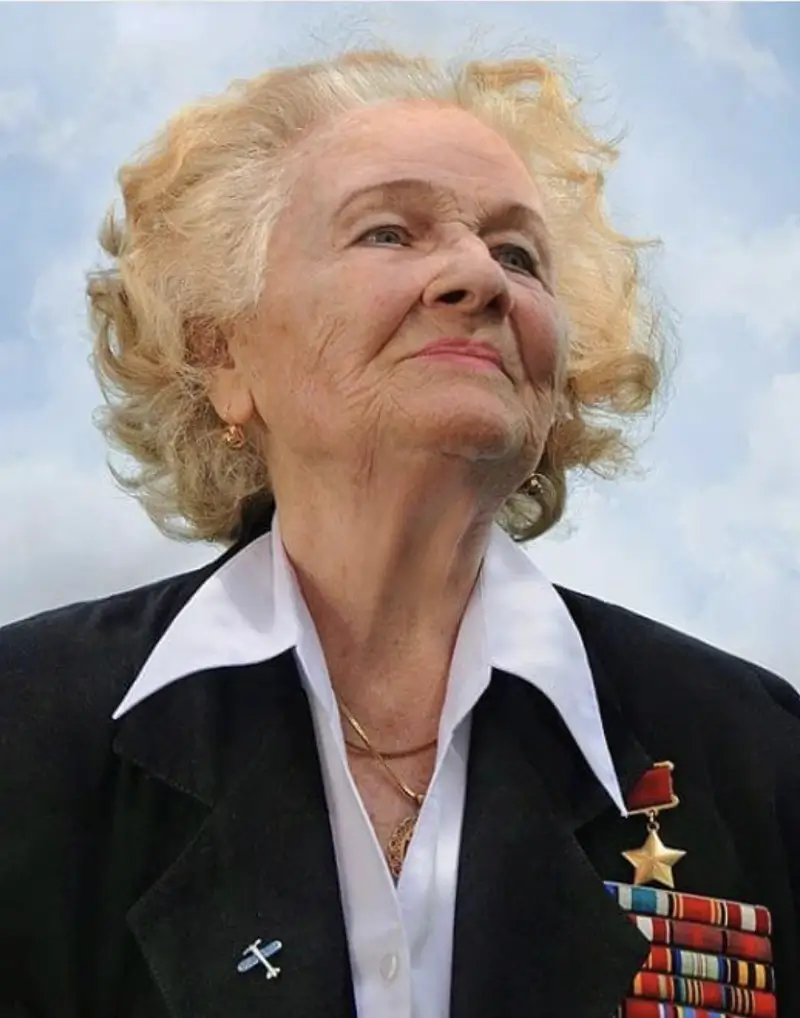
Popova’s death in 2013 drew international notice because she had become one of the public faces of the regiment. The Washington Post described her as a celebrated Soviet “Night Witch” aviator, and that description still captures her place in history: not just a pilot, but a representative of an entire combat tradition that has become symbolic of courage under constraint. The regiment’s memory survives because it answers a question that still matters: what happens when people with limited tools refuse to accept limited results?
Conclusion
The Night Witches did not win their reputation with speed, glamour, or mechanical superiority. They won it with repetition, discipline, and nerve. Nadezhda Popova’s career shows how that worked in practice: a woman trained in flight before the war, drawn into combat by crisis, and transformed into one of the most effective night-bomber pilots of the Eastern Front. Her story, and the regiment’s, remains powerful because it is both specific and universal. Specific, because it belongs to one Soviet unit in one war. Universal, because it shows how ingenuity can turn weakness into force.
That is why the Night Witches still matter. They remind us that history often turns on people who keep going when their equipment is poor, their conditions are harsh, and their odds look thin. In the dark above the Eastern Front, a fragile biplane became something larger than the sum of its parts. It became a weapon.
Timeline
- October 1941: Soviet authorities authorize three women’s aviation regiments after the German invasion creates urgent manpower needs. The 588th Night Bomber Regiment is formed in this context.
- June 1942: The regiment enters front-line combat on the Eastern Front.
- February 1943: The unit receives Guards designation and becomes the 46th Guards Night Bomber Aviation Regiment.
- 1943–1944: The regiment supports major campaigns across the Caucasus, Crimea, Belarus, and Poland.
- 1944: Popova’s combat record includes an 18-sortie night in some historical reporting.
- 1945: The war ends, and the regiment has flown more than 24,000 missions, according to the National WWII Museum.
- 2013: Nadezhda Popova dies at age 91.
Key Facts
- Unit name: 588th Night Bomber Regiment; later 46th Guards Night Bomber Aviation Regiment, also known as the 46th Taman Guards Night Bomber Aviation Regiment.
- Nickname: Night Witches.
- Formation date: October 1941.
- Operational role: Night harassment bombing.
- Aircraft used: Polikarpov Po-2 biplane.
- Aircraft construction: Wood-and-canvas biplane originally designed as a trainer and utility aircraft.
- Mission method: Engine cut before approach, glide bombing in darkness, minimal warning to the target.
- Combat scale: More than 24,000 missions, according to the National WWII Museum.
- Nadezhda Popova: Soviet aviator, one of the regiment’s best-known pilots, credited with 852 missions.
- Recognition: Hero of the Soviet Union and other major honors.
- Legacy: One of the most famous all-female combat aviation units of World War II.
Key Takeaways
- The Night Witches were an all-female Soviet combat aviation unit.
- They flew obsolete aircraft but used them with tactical precision.
- Their story combines military history, women’s history, and aviation history in one unit.

Add your first comment to this post